
High-Performance UHPC Wall Panels for Modern Architecture
Ultra-High Performance Concrete (UHPC) has emerged as a revolutionary material in the field of architecture and construction. Its application in wall panels offers unprecedented possibilities for modern building façades, combining structural strength, durability, and aesthetic versatility. UHPC wall panels provide architects and engineers with a lightweight yet resilient option for exterior cladding, enabling innovative designs while reducing structural load and maintenance costs. This article explores the technical, structural, and practical benefits of UHPC wall panels, while examining market trends, manufacturing processes, and future directions in the context of modern architecture.
The demand for high-performance, sustainable, and visually striking façade materials is growing rapidly in urban environments. Rising high-rise developments, complex building geometries, and stringent environmental standards have created the need for materials that provide both structural efficiency and design flexibility. Traditional concrete panels, while robust, are heavy and limited in design adaptability.
UHPC wall panels meet these challenges by offering a high-strength, thin-panel solution capable of supporting large-format façades and intricate textures. The global construction market increasingly prioritizes materials that combine durability with lightweight performance, aligning with sustainability goals and fast-paced construction schedules. Consequently, UHPC wall panels are being adopted for commercial, residential, institutional, and infrastructural projects where long-term performance and aesthetic quality are critical.
UHPC is a cementitious composite material with significantly higher compressive and tensile strength than conventional concrete. The core technical principles of UHPC wall panels include:
Ultra-Dense Microstructure: Optimized particle packing reduces porosity, enhancing strength and durability.
High Fiber Reinforcement: Steel or synthetic fibers improve tensile and flexural strength, allowing thinner panel construction without cracking.
Low Water-Cement Ratio: Precise mix design ensures minimal shrinkage, high density, and controlled curing.
Advanced Admixtures: Chemical additives improve workability, cohesion, and long-term performance.
These principles enable UHPC wall panels to resist mechanical stress, environmental exposure, and aging, while providing design flexibility for modern architectural applications.
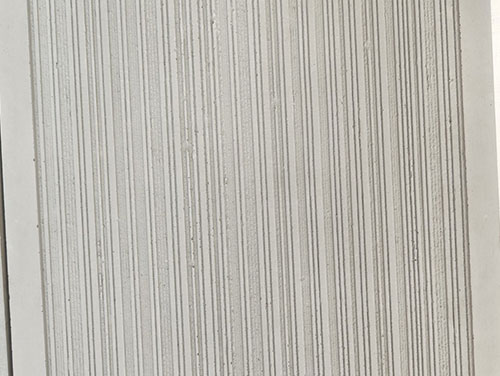
UHPC wall panels are composed of:
Cementitious Matrix: High-quality Portland cement or blended cement.
Fine Aggregates: Silica sand or quartz for uniform texture and particle packing.
Fibers: Steel, glass, or synthetic fibers for tensile reinforcement.
Chemical Admixtures: Superplasticizers and viscosity-modifying agents.
Optional Pigments: For color customization and aesthetic finishes.
Mixing: High-shear mixers ensure uniform fiber distribution and consistent workability.
Casting or Pressing: Panels are either cast in molds or compressed under controlled pressure to achieve high density.
Molding and Texturing: Custom molds allow intricate surface finishes and precise panel dimensions.
Curing: Temperature and humidity-controlled curing optimizes mechanical properties and reduces shrinkage.
Finishing: Sandblasting, polishing, or coating enhances surface durability and visual appeal.
The combination of material precision and manufacturing control guarantees consistent quality, which is crucial for façade applications in demanding architectural projects.
The quality of UHPC wall panels is influenced by several key factors:
Fiber Distribution: Uneven reinforcement can compromise tensile strength and crack resistance.
Water-to-Cement Ratio: Excess water reduces strength; insufficient water affects workability.
Curing Conditions: Temperature and humidity variations can lead to shrinkage or reduced durability.
Panel Thickness and Geometry: Thin or complex panels require precise engineering and mold design.
Environmental Exposure: Coastal, urban, or high-UV environments may require specific admixtures or coatings.
Strict adherence to material standards, manufacturing protocols, and quality control measures ensures long-term performance and minimizes potential failures.
Choosing reliable UHPC wall panel suppliers is critical for project success. Key criteria include:
Proven experience in producing façade-grade UHPC panels.
In-house testing and quality assurance capabilities.
Ability to create custom molds and finishes for complex geometries.
Efficient logistics and panel handling for large-format or heavy panels.
Engineering support for installation, anchoring, and integration with structural frameworks.
Partnering with experienced suppliers reduces risks associated with defects, delays, or installation challenges, ensuring that projects meet both technical and aesthetic requirements.
While UHPC wall panels offer numerous advantages, there are challenges:
High Initial Costs: Although UHPC panels reduce long-term maintenance costs, initial material and fabrication costs are higher than conventional concrete.
Installation Complexity: Large or intricate panels require precise alignment, specialized anchoring, and careful handling.
Surface Defects: Air voids or fiber clumping may affect appearance if manufacturing processes are not rigorously controlled.
Limited On-Site Adjustments: Panels are prefabricated; modifications on-site are difficult and may compromise integrity.
Addressing these challenges requires proper planning, experienced contractors, and adherence to best practices in manufacturing and installation.
UHPC wall panels have been successfully applied across diverse construction sectors:
Commercial Buildings: High-rise office towers, shopping complexes, and corporate headquarters benefit from lightweight, durable façades with complex textures.
Residential Projects: Multi-story residential towers and luxury apartments use UHPC panels for aesthetic appeal, reduced structural load, and fast installation.
Institutional and Cultural Buildings: Museums, theaters, and civic centers utilize UHPC for creative façades with intricate geometric or textured surfaces.
Infrastructure Projects: Bridges, stadiums, and pedestrian facilities use UHPC panels for durability, impact resistance, and low maintenance.
Modular Construction: Prefabricated UHPC wall panels integrate into modular systems, reducing on-site labor and construction time.
These examples highlight UHPC panels’ versatility, combining functionality, durability, and aesthetic freedom.
The evolution of UHPC wall panels is shaped by technological innovation and sustainability trends:
Digital Fabrication: CNC molds and robotic casting allow highly detailed and large-format panels.
Sustainable Mix Designs: Integration of recycled aggregates and supplementary cementitious materials reduces environmental impact.
Hybrid Systems: Combining UHPC panels with insulation or composite layers improves thermal performance and energy efficiency.
Performance Enhancements: Research focuses on increasing fire resistance, surface durability, and longevity.
Prefabrication Growth: Modular and prefabricated building systems are driving wider adoption of UHPC panels for faster construction and quality assurance.
These trends suggest that UHPC wall panels will continue to be integral in high-performance, sustainable, and visually striking architectural projects.
1. How long do UHPC wall panels last?
With proper installation, UHPC panels can last 50–75 years, maintaining structural integrity and surface appearance.
2. Can UHPC panels withstand extreme weather?
Yes, UHPC demonstrates excellent resistance to freeze-thaw cycles, UV exposure, and chemical corrosion.
3. Are UHPC panels suitable for intricate designs?
Absolutely. UHPC allows thin, lightweight panels with complex textures and custom geometries.
4. What maintenance is required for UHPC façades?
Periodic cleaning and inspection, along with protective coatings in harsh environments, help maintain durability and appearance.
5. How does UHPC compare to traditional concrete panels?
UHPC panels are stronger, lighter, and more flexible in design, offering longer lifespan and reduced structural load.
High-performance UHPC wall panels represent a significant advancement in modern architectural design, offering unmatched strength, durability, and aesthetic flexibility. Their lightweight, prefabricated nature allows for faster construction, reduced structural load, and precise integration into complex building geometries. By leveraging UHPC panels, architects and engineers can achieve innovative façades that combine visual appeal with long-term performance. Advances in materials, manufacturing technology, and sustainability continue to expand the applications of UHPC wall panels, solidifying their role in high-performance, resilient, and energy-efficient architecture worldwide.
Denne nettsiden bruker informasjonskapsler for å sikre at du får den beste opplevelsen på nettstedet vårt.

 English
 Español
 Portugues
 Pусский
 Français
 Deutsch
 日本語
日本語 한국어
한국어 العربية
 Italiano
 Polski
 Türk dili
 Melayu
 中文
中文 қазақ
қазақ עִברִית
 українська
 o'zbek
 ଓଡିଆ
ଓଡିଆ



 Telefon
Kommentar
(0)